
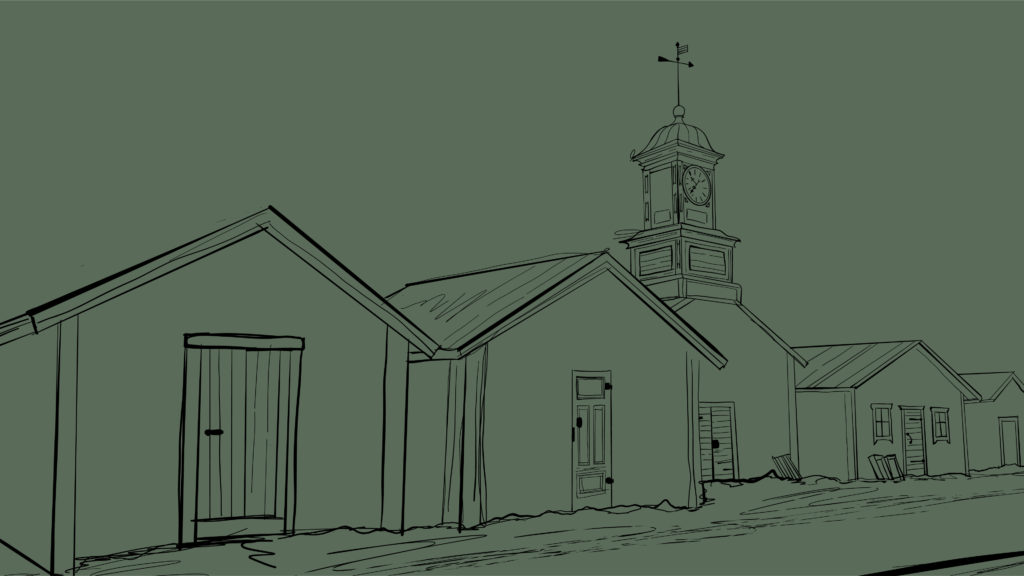
Buildings in Matkakoski SWE
At Swedish Matkakoski, there is a rapids area where the built environment is closely connected to the traditional dipnet fishing culture of the Torne River. The grilling hut, the storage building, and the ice cellar together form a cohesive built cultural environment at Matkakoski. These structures are directly linked to dipnet fishing and provide a clear picture of how fishing was practiced, organized, and lived at the rapids. The built environment at Matkakoski is an important expression of the dipnet fishing tradition and contributes to the understanding of the Torne River rapids as historical working and cultural environments.
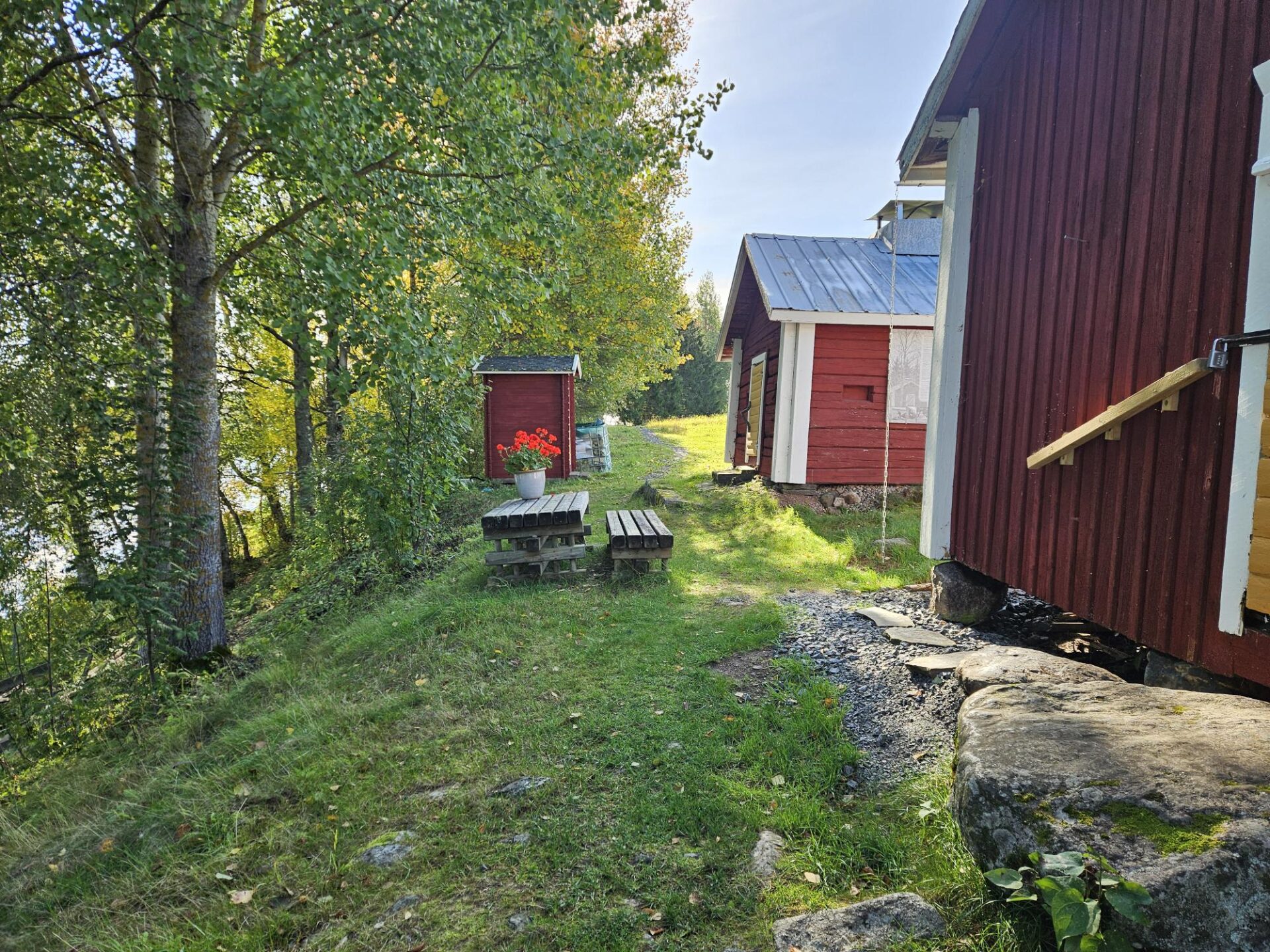
Photo: Torne Valley Museum
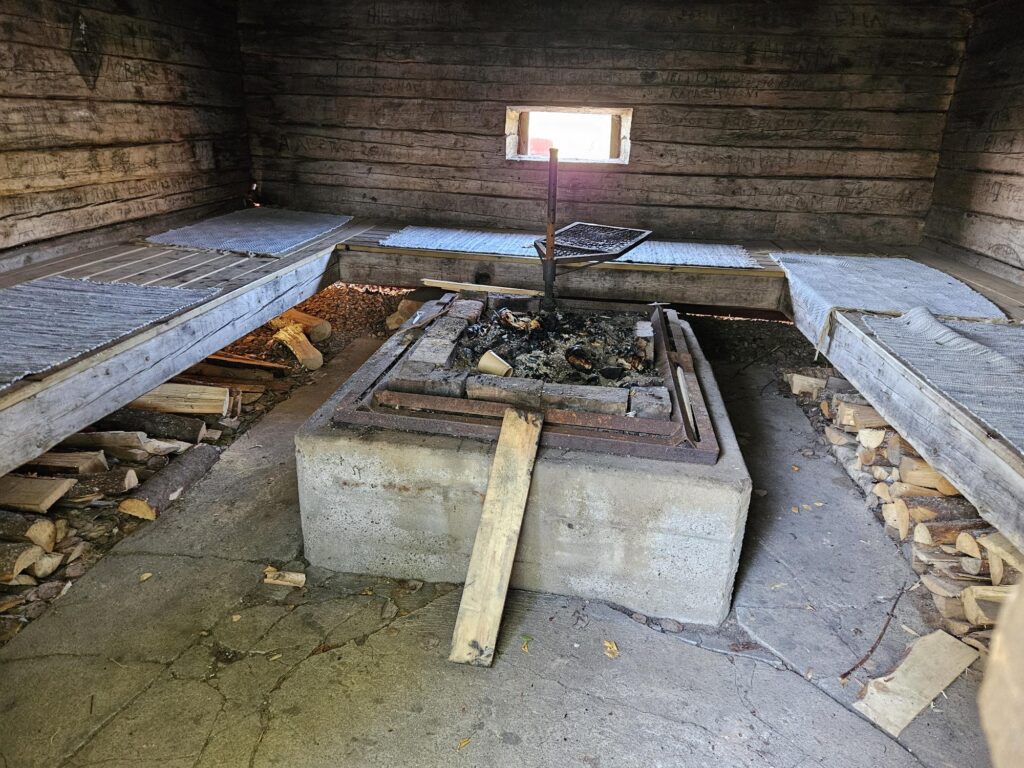
Grilling hut (Koskikota)
The grilling hut at Matkakoski, also known as the Koskikota, is an important meeting place where villagers and dipnetters gather and skewer whitefish in the traditional way. The building is believed to have been constructed in 1866—a year carved into the exterior gable log—which coincides with the establishment of the Matkakoski fishing association. The building has recently been restored as part of a Leader project.
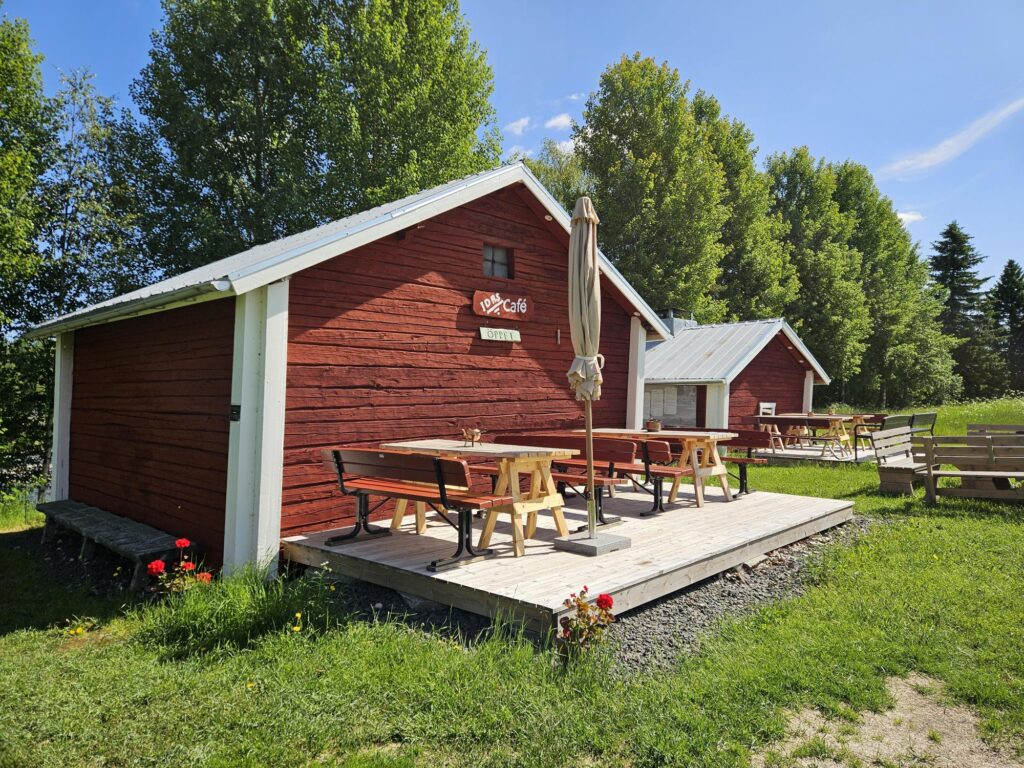
Storage building – Ida’s café
Next to the grilling hut stands a storage building that was used to keep shared fishing equipment and tools needed for fishing at the rapids, as well as a resting space for fishers and gatherings. Inside the building, next to the door, the year 1881 is carved into the timber, likely indicating when the structure was built. Today, the building has been given a new function as a summer café.
Ice cellar
There is also an ice cellar at the rapids area, dug into the riverbank. It was used for storing the fish catch and was filled with snow during winter to maintain a low temperature throughout the summer. The ice cellar is a functional feature that illustrates how the catch was handled before further use or transport.


