Buildings in Kukkolankoski FI
The fishing site at Kukkolankoski is included in the Finnish Heritage Agency’s inventory of nationally significant built cultural environments (RKY). On the riverside area next to Kukkolankoski there are buildings essential to the fishing culture, such as storage huts, a grilling hut, and a fish storage building. The most important building at the site, the grilling hut, was built in the 17th century.
Kukkolankoski as a historic marketplace
Since the 1500s, Kukkolankoski has been a thriving trading place where fish caught from the river functioned as a means of payment. Road connections to the river valley developed in the 18th century, and after the period of Russian oppression ended, Kukkola grew into the largest village in the valley. After the Finnish War in 1809, the village was divided into two parts belonging to two different countries.
Buildings at the fishing site and their development
The fishing site at Kukkolankoski is characterized by a row of storage huts, with the village’s oldest granary at the beginning of the row. Between the huts and the river stands the area’s oldest building, a 17th-century grilling hut. The site also includes a fish storage building called Kalapuohi.
In addition to fishing, agriculture has been an important secondary livelihood, which is also reflected at the fishing site. Water-powered milling activities expanded during the 19th century, with mills mainly used to process grain. The upper mill at Kukkolankoski was destroyed in a flood in the 1930s, likely ending the use of Myllynpirtti at that time. However, Myllynpirtti, built in 1865, has been well preserved and now serves as a summer café.
Other buildings date from the 19th and early 20th centuries and are located close to the village road, Koskitie. In the 1920s, the rapids were modified for log floating, and the Niskala farm was established on the eastern side of the road. Over time, some buildings have deteriorated, been relocated, or demolished, altering the structure of the area.
During the 20th century, Kukkolankoksi also developed into a tourist destination. The building stock was renewed and expanded during the 1960s–1970s, while the storage huts were renovated.

Photo: City of Tornio
Storage huts
Several huts along the rapids are primarily used for storing fishing equipment, including dip nets and traps. The huts are owned by village farms; the oldest are log-built, while some newer ones are wooden plank constructions. The oldest huts are simple single-storey buildings in an 18th-century style. During the 20th century, decayed huts were demolished, and gaps in the row were filled by relocating old huts from other areas.

Kalapuohi (fish storage building)
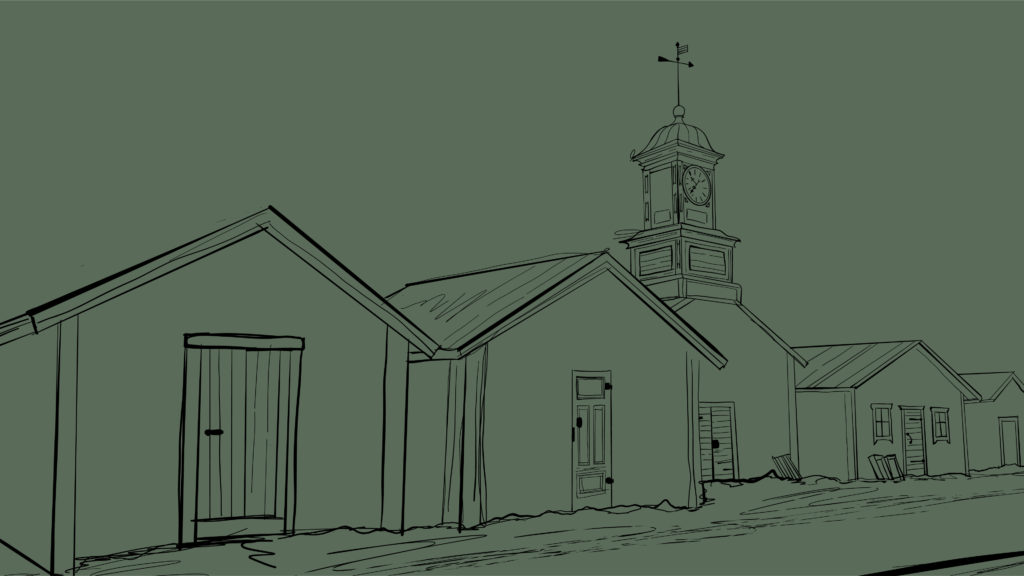
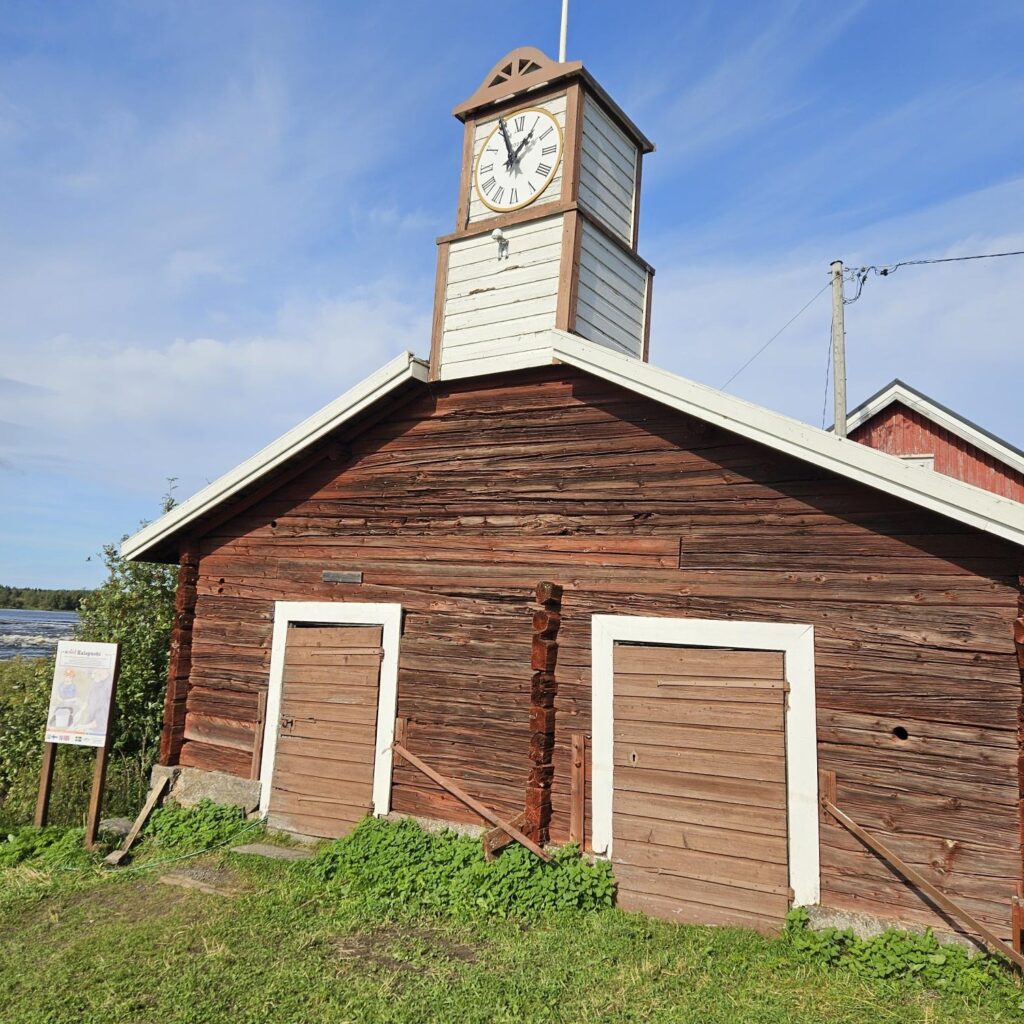
The building known as Kalapuohi in Finnish is located at the northern end of the fishing site and is used for storing fish. Together with the grilling hut, it is an important building for the village community. A bell tower on its roof signals when it is time to change dipnet fishing shifts and divide the whitefish catch—an especially important function when personal timepieces were rare.
The building has two doors: historically, one led to whitefish storage and the other to salmon, with the salmon section being smaller. Both sections once had ice cellars to ensure proper storage. These insulated spaces were filled with snow and ice and protected from summer heat and light. The salmon cellar is no longer in use and was removed to create more storage space, while the daily whitefish catch is still kept in the cooling room until it is divided.
Whitefish division takes place in front of the building. Today, the building also contains a scale and an ice machine.
Grilling hut (Paistokota)
The grilling hut is the oldest building at the Kukkolaforsen fishing site and dates back to the 17th century. It is one of the most important buildings at the rapids and remains in active use. This low log-built structure represents a very old building type that has largely disappeared elsewhere.
Historically, it has been used to prepare traditional local dishes such as skewered whitefish and whitefish soup, served not only to dipnet fishers but also to villagers and passers-by. In prehistoric times, buildings of this type were used as dwellings. They were typically large, with an open hearth in the middle. Smoke from the fire used for heating and cooking exited through an opening in the roof, which also allowed light inside.
In the past, dipnetters also stayed overnight at the rapids during summer fishing shifts. The wide benches along the walls could accommodate several fishers at once. Traditionally, the hut had a birch-bark roof covered with poles.
Myllynpirtti
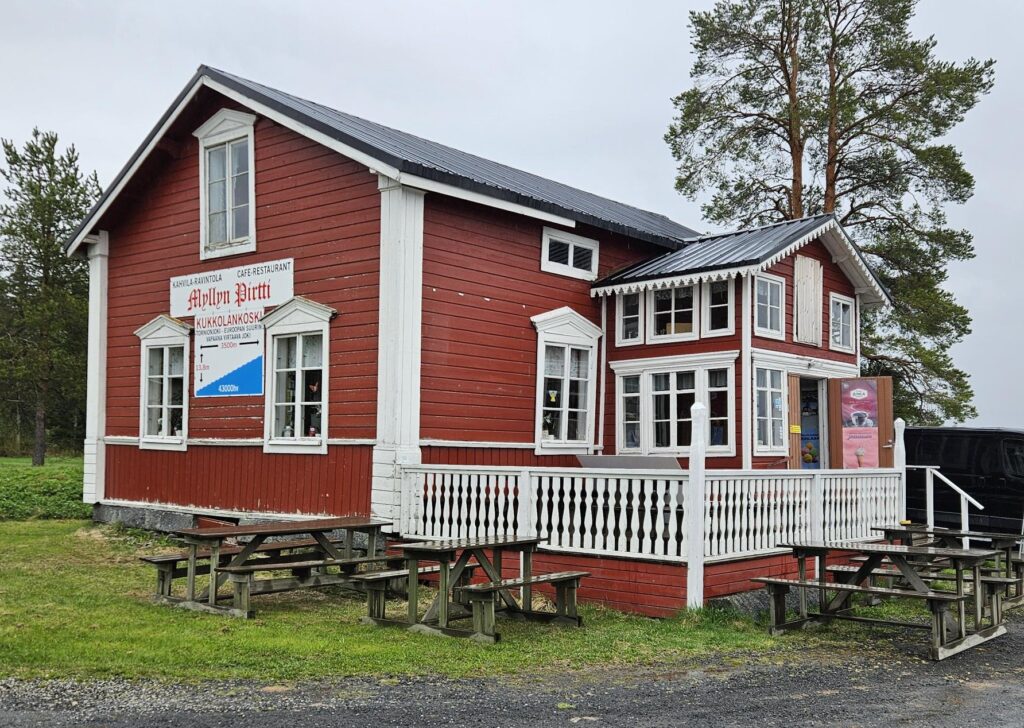
Myllynpirtti, used as a summer café since 1951, was built by Petter Palo in 1865. Initially, it served as a residence for the miller’s family, later standing unused before being renovated into a café. The building is rectangular, with a tall enclosed porch and veranda. Following traditional Northern Ostrobothnian building style, it features decorative window frames and a two-storey wooden porch.
Log-floating statue
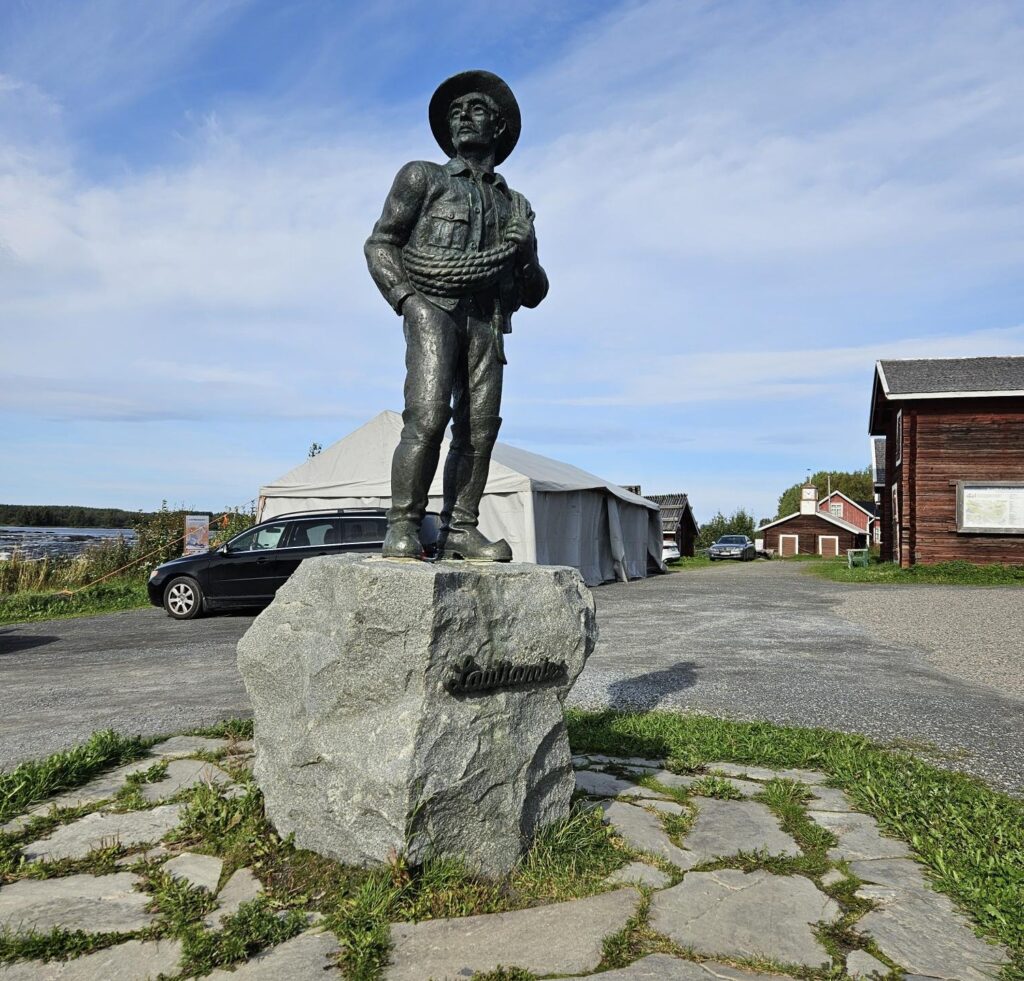
The river has long been used for timber floating. The growth of the sawmill industry in the late 19th century led to large-scale timber transport. Log floating was an important source of employment in the river valley. Timber was transported as bound rafts until the 1920s, after which loose log floating became standard. The log-floating statue by sculptor Eino Seppänen, dedicated to this work, was unveiled in 1961 and is the first landmark greeting visitors arriving at Kukkolaforsen.